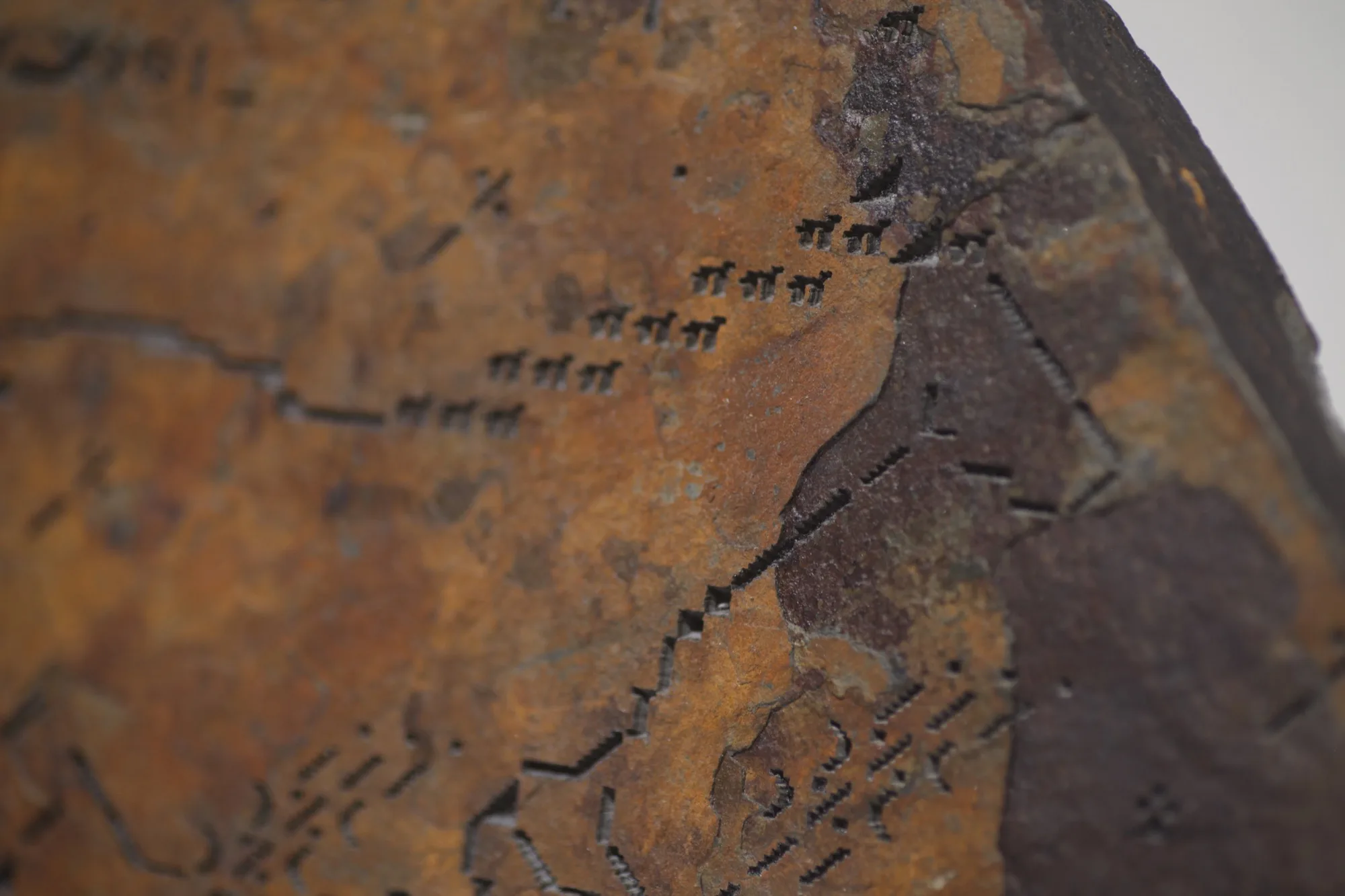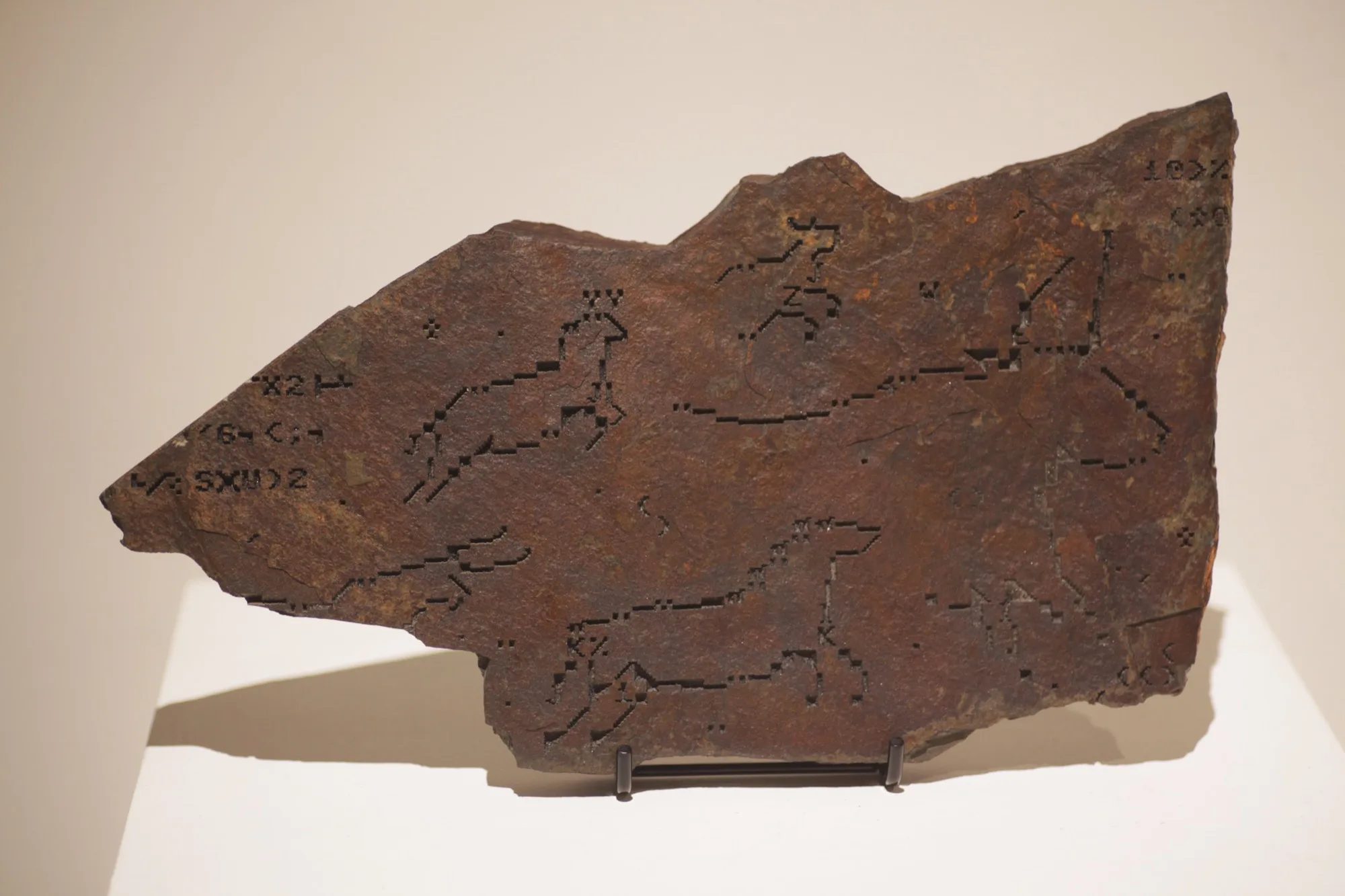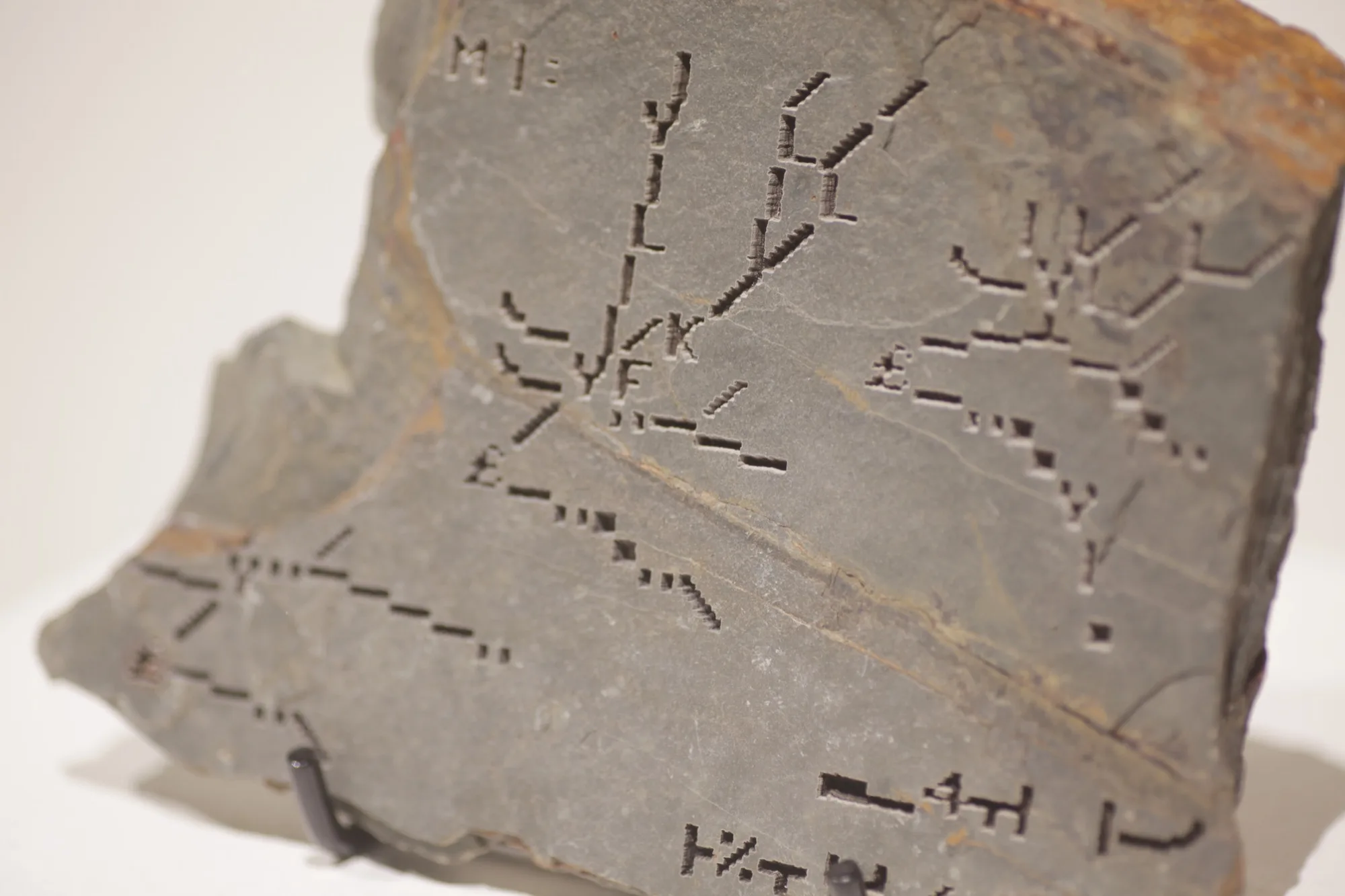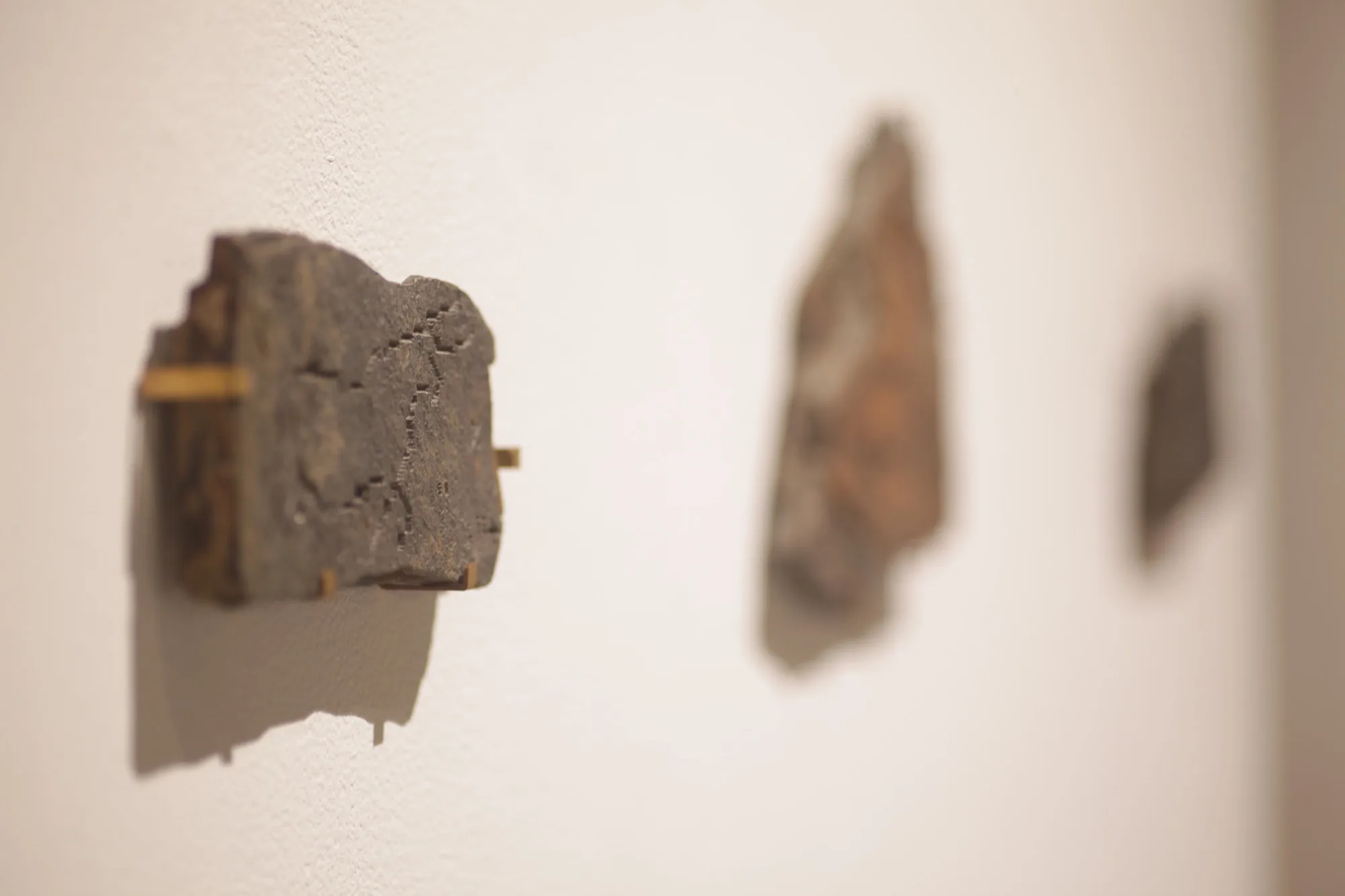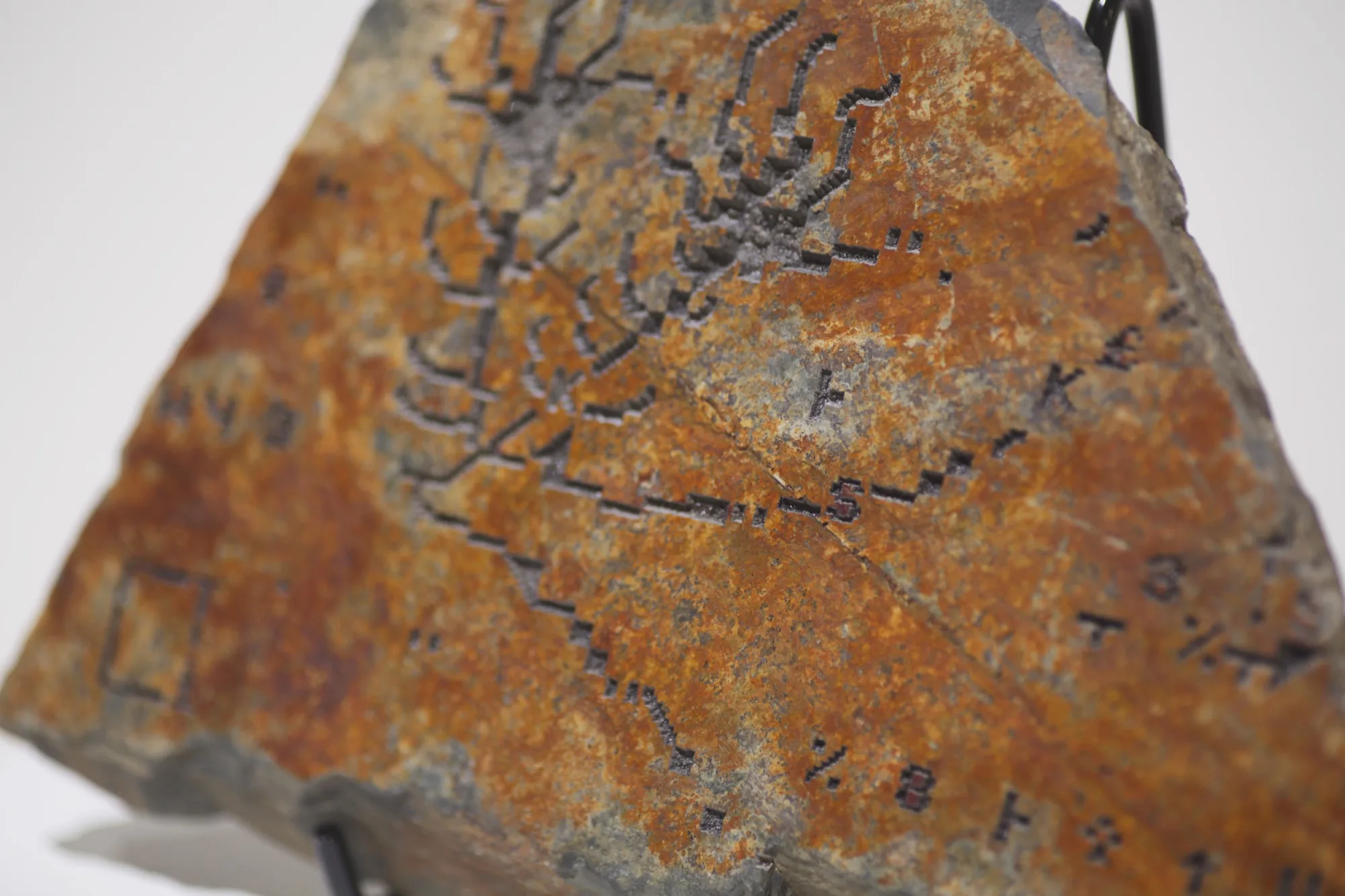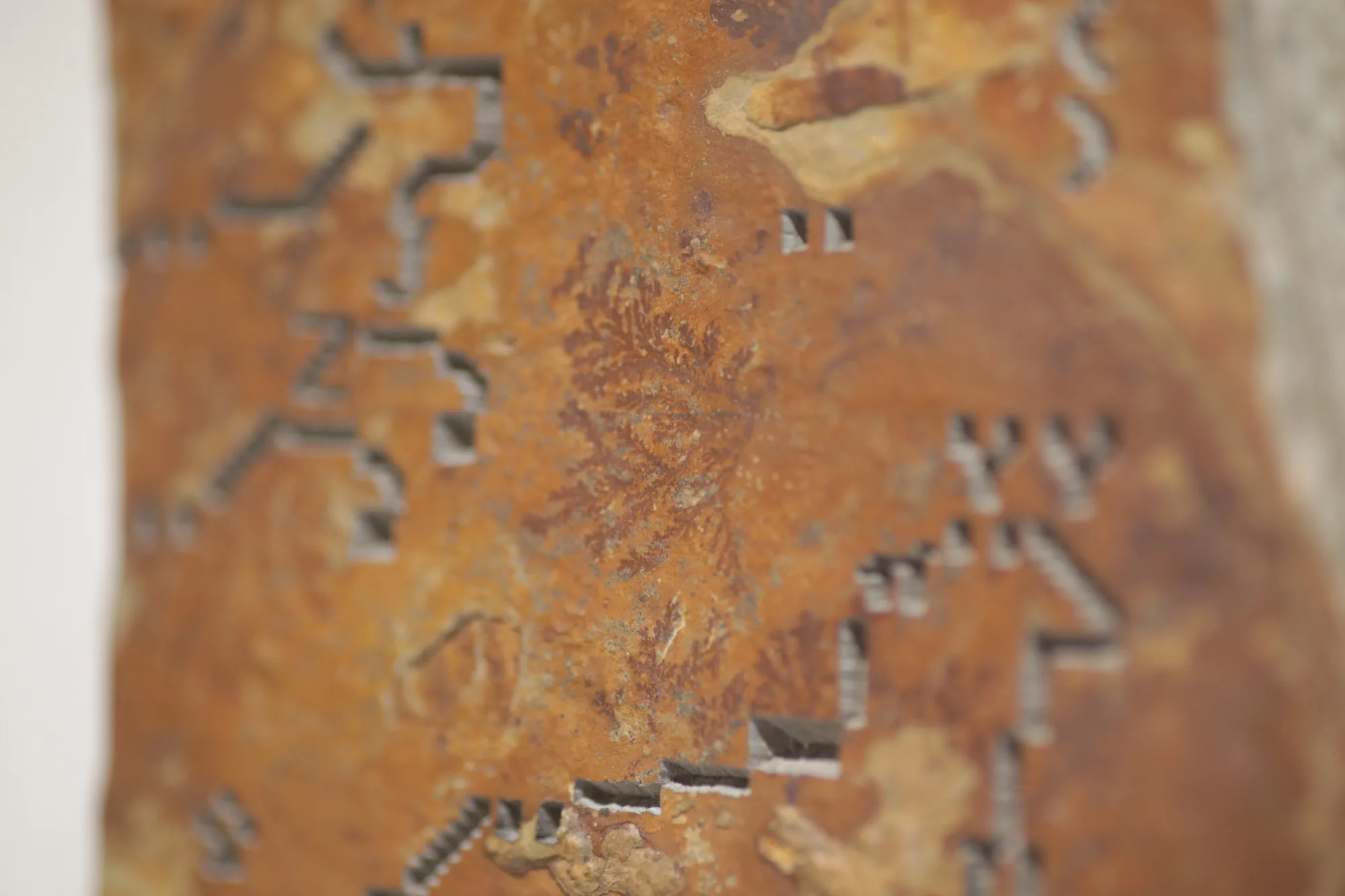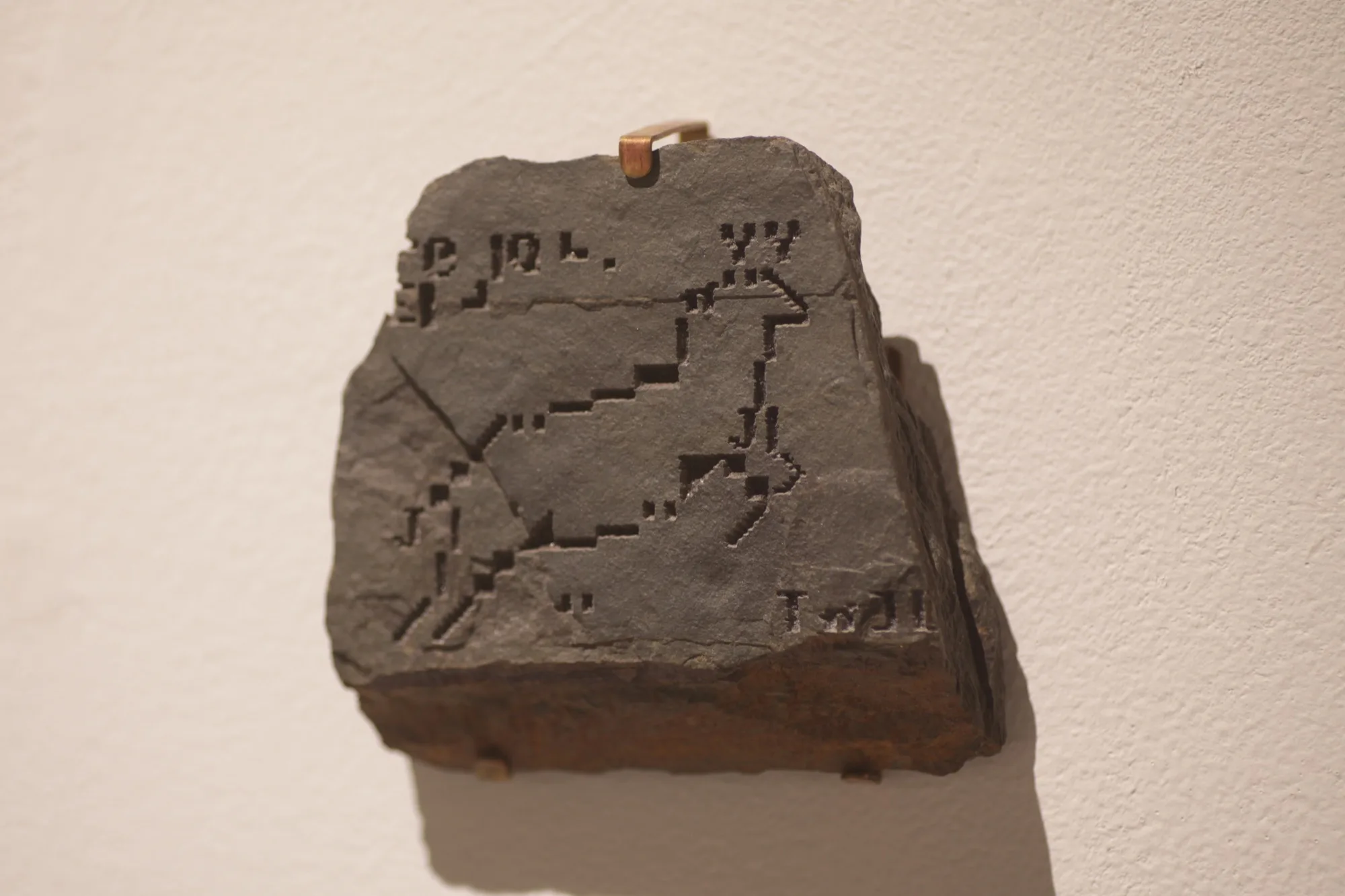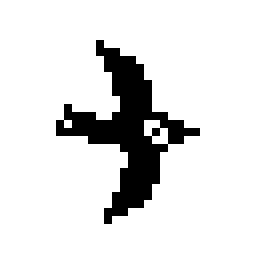
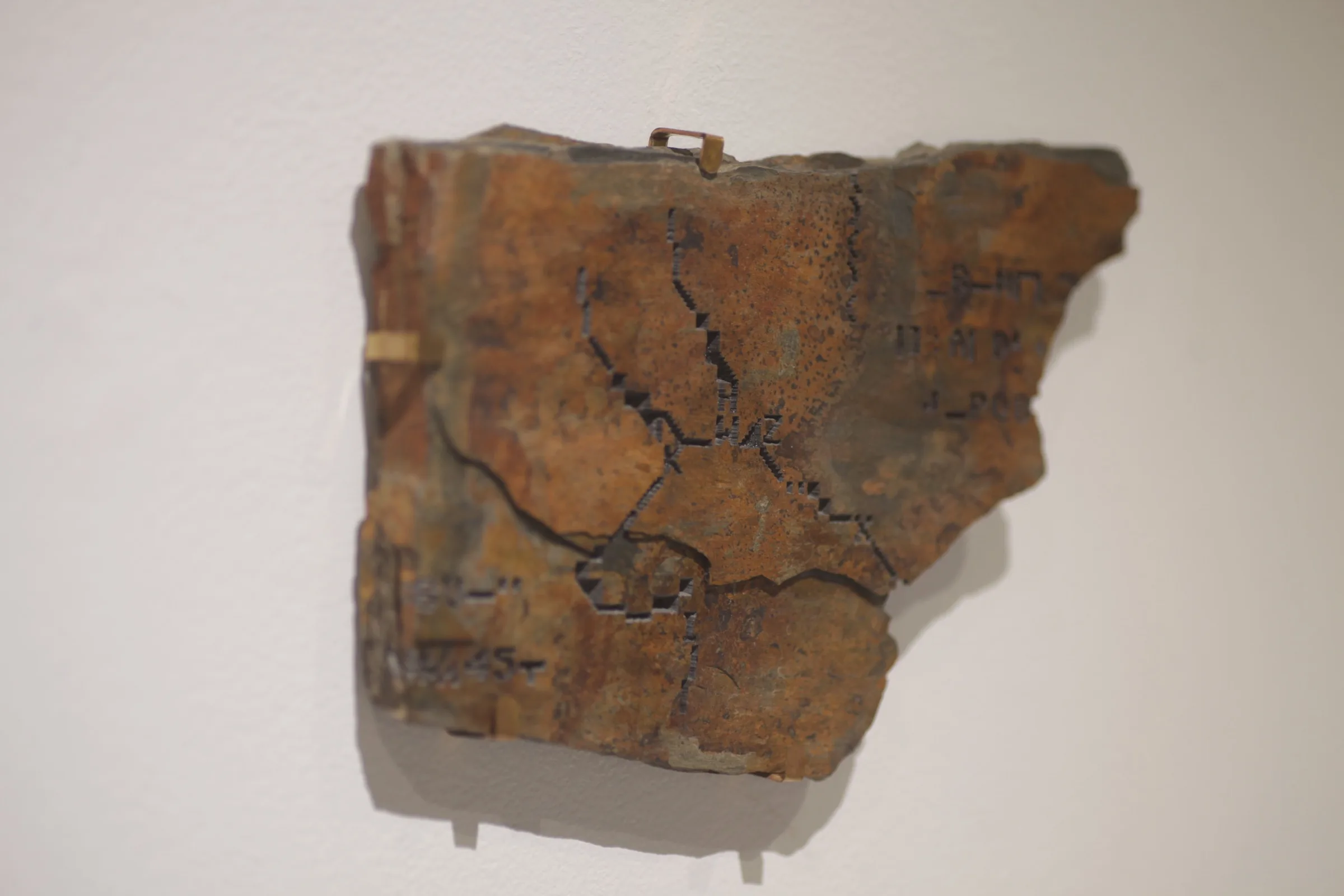
初期のパーソナルコンピューターで用いられた文字コード「PETSCII」で描いた動物たちを、粘板岩(スレート)に刻んだ作品群です。動物たちの姿は古代壁画をモチーフにしています。岩壁に描かれた図像も、計算機にはじめて書かせる一行と同じように、世界に向けた私たちの最初の挨拶だったのかもしれません。
かつて人類は図像から記号を生み出しましたが、コンピューターの黎明期には、逆にその記号を用いて図像を描きました。具体的で身体的な図像と、抽象的で観念的な記号——私たちは、ひとりの個体のうちでも、人類の歴史のうちでも、このふたつの領域を行き来しながら世界を捉え、記録してきたように思えます。
先史の時代より人が触れ刻むことで記憶を留めてきた記録装置でもある「粘板岩」。人の抽象的思考が生み出し、その思考をさらに拡張してきた「計算装置」。由来も時間の尺度も異なるふたつが、それぞれの時間の果てに出会い、一枚の石の面で最初の挨拶を交わしています。
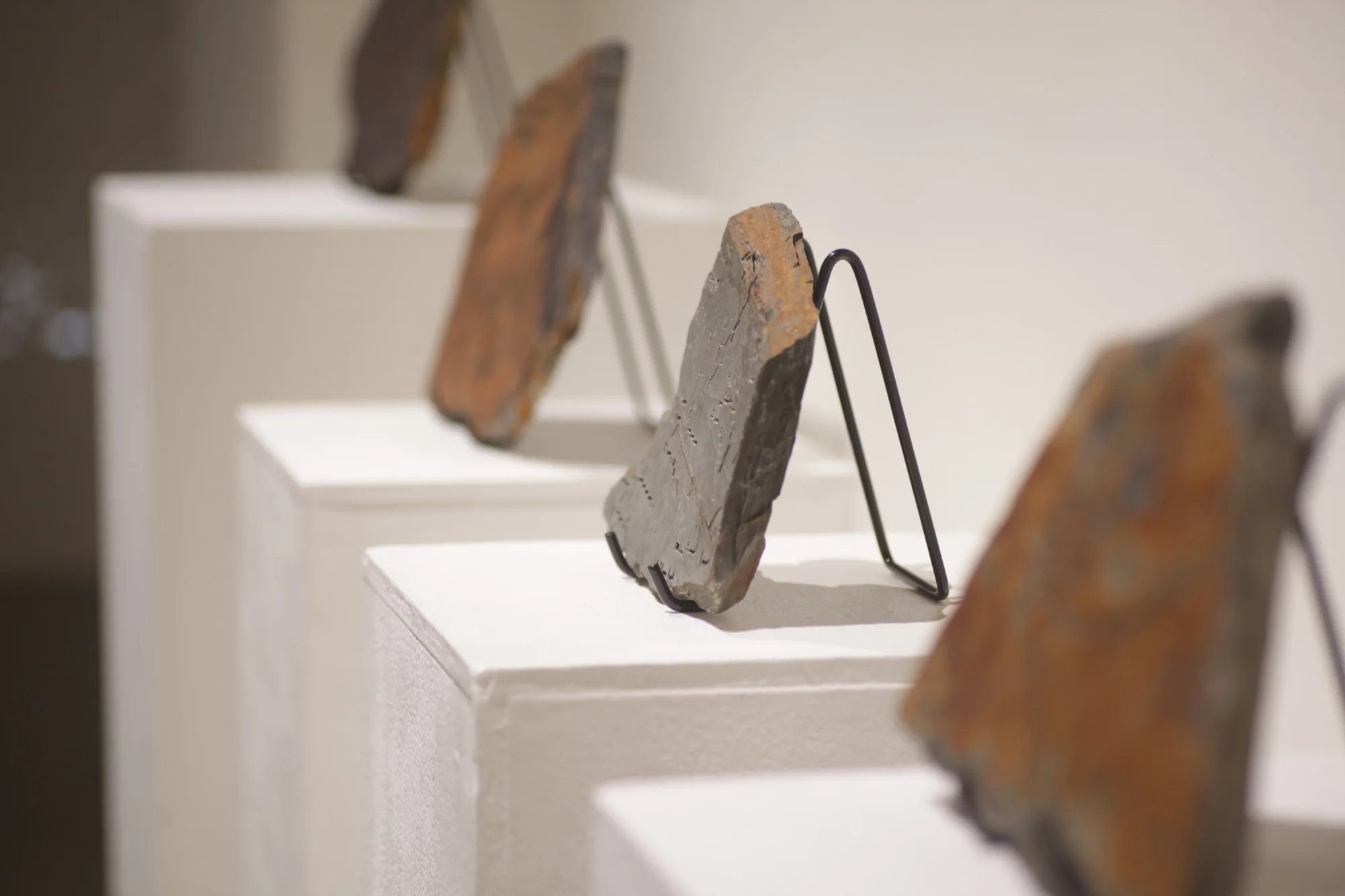
2026年、個展「連続と非連続の汀で」(Otherwise Gallery/東京)にて初公開しました。
A series of works in which animals, drawn in PETSCII—a character set used on early personal computers—are engraved into slate. The animals are modeled on ancient cave paintings. Perhaps the images drawn on a rock wall were, like the first line a machine is ever made to write, our first greeting sent out into the world.
Humankind once generated signs out of images; in the earliest days of computing, we reversed the operation and used those signs to draw images. Concrete, bodily images and abstract, conceptual signs—both within a single individual and across the history of our species, it seems we have grasped and recorded the world by moving back and forth between these two domains.
"Slate," a recording medium in which people have held memory by touch and incision since prehistory. "The computational device," born of human abstract thought and going on to extend that thought further. The two, unlike in origin and in the scale of time they inhabit, each arriving at the far end of its own, meet and exchange a first greeting on the face of a single sheet of stone.
First presented in 2026 in the solo exhibition "Continuous and Discontinuous of Migiwa" (Otherwise Gallery, Tokyo).