
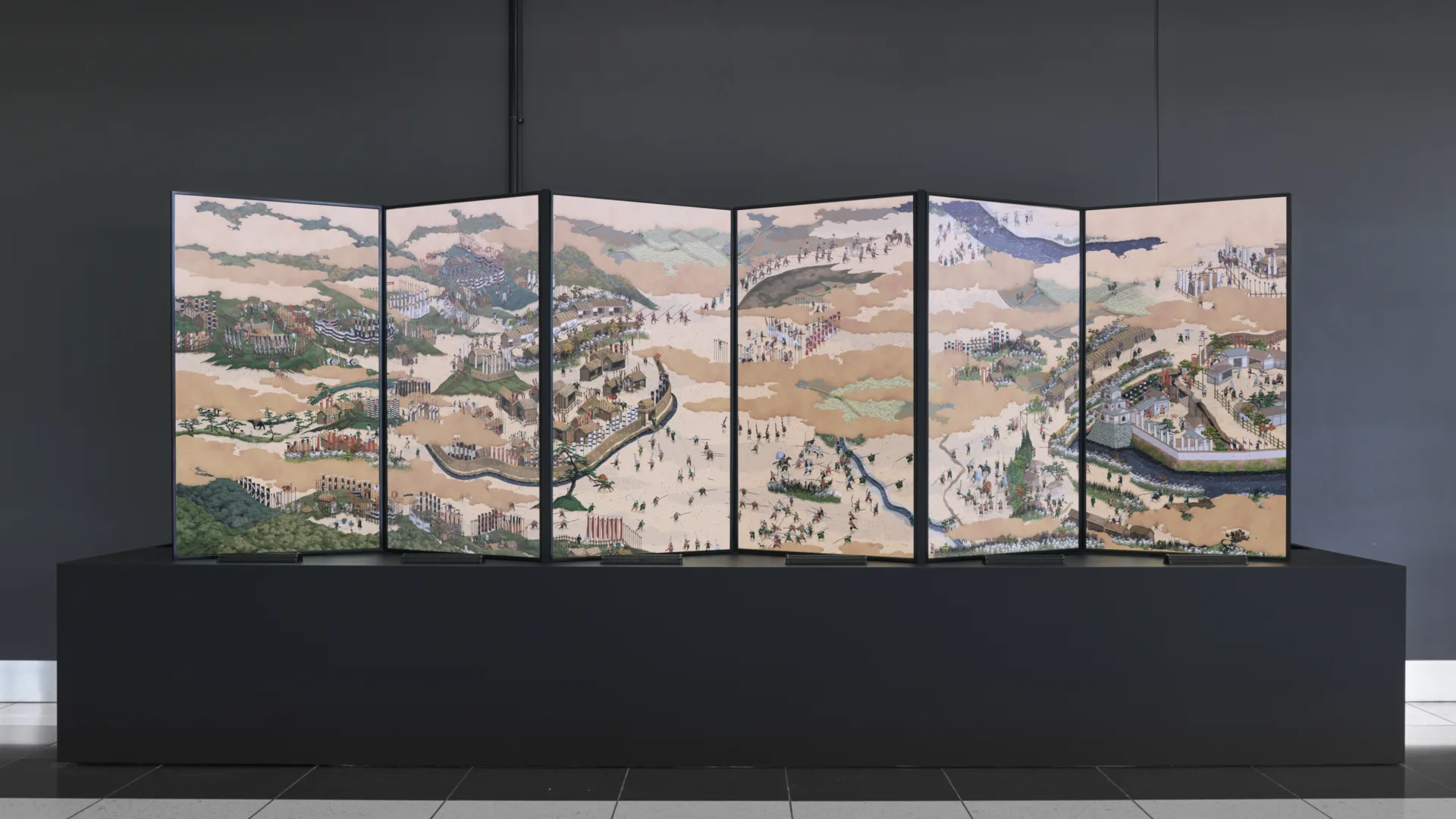
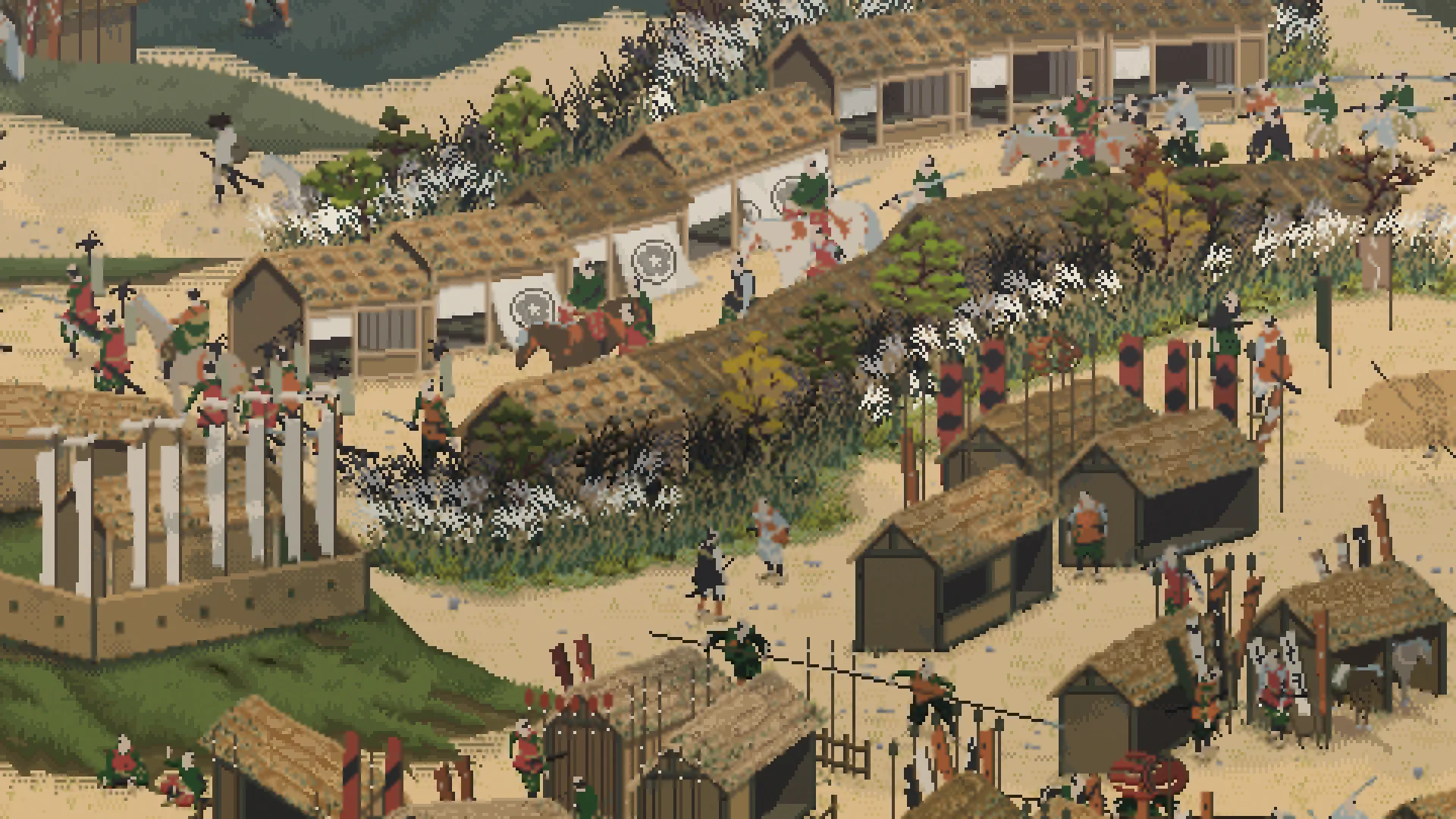
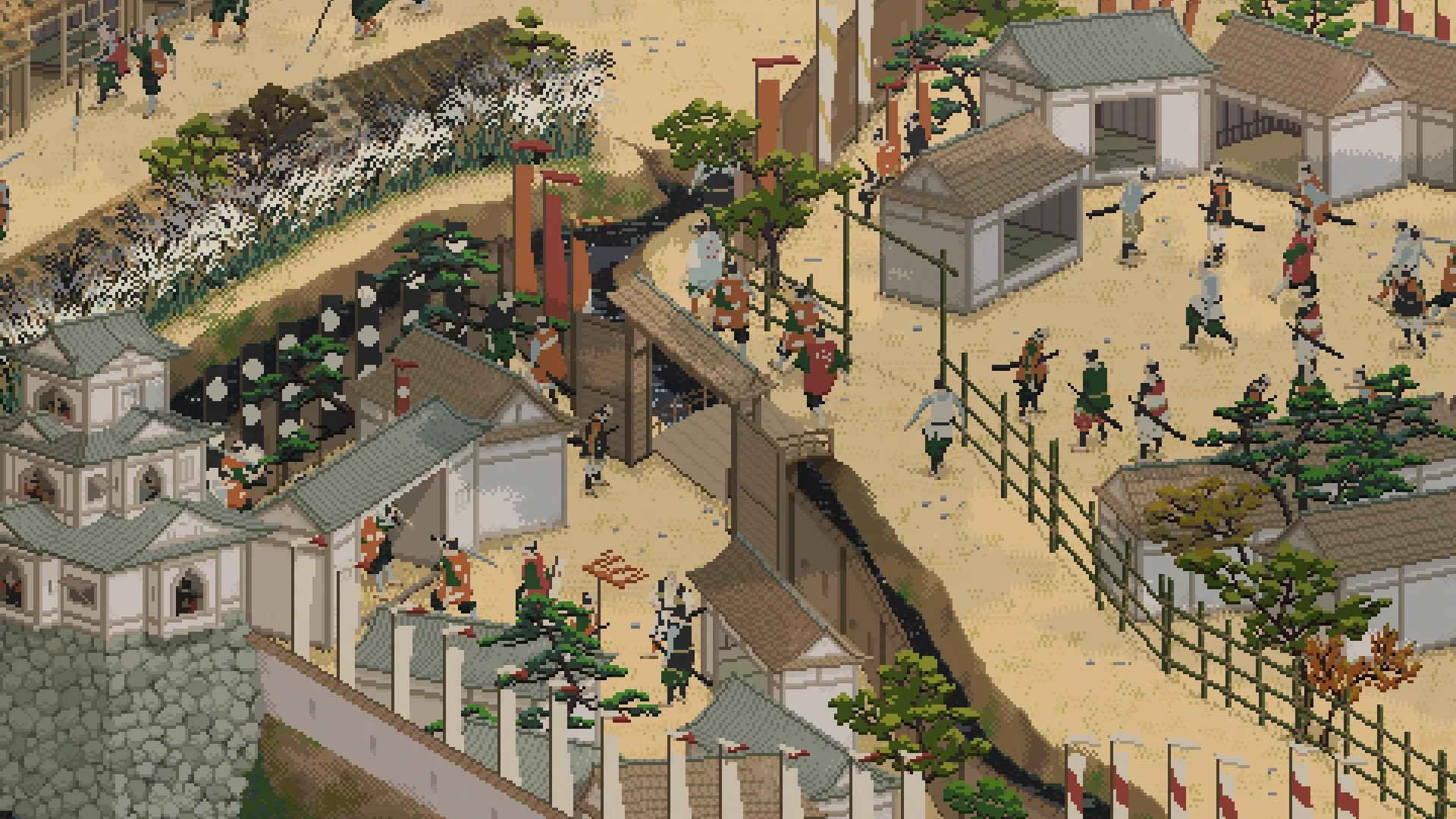
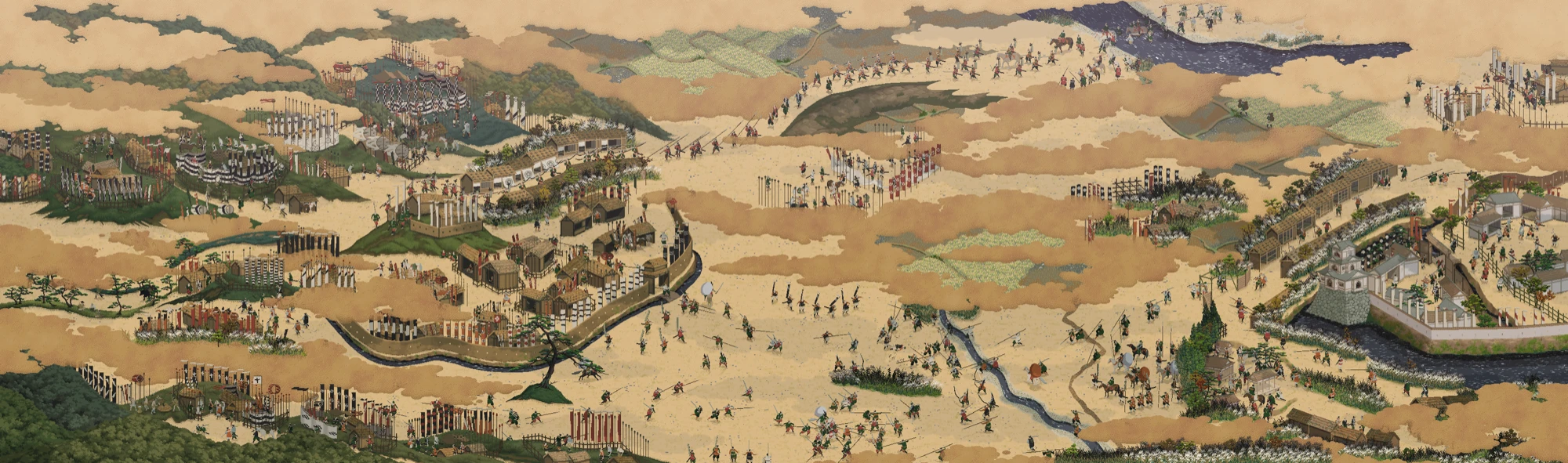
文化庁による日本文化発信プロジェクト「CULTURE GATE to JAPAN」の一環として、中部国際空港での公開に向けて企画・制作されたデジタル屏風絵です。
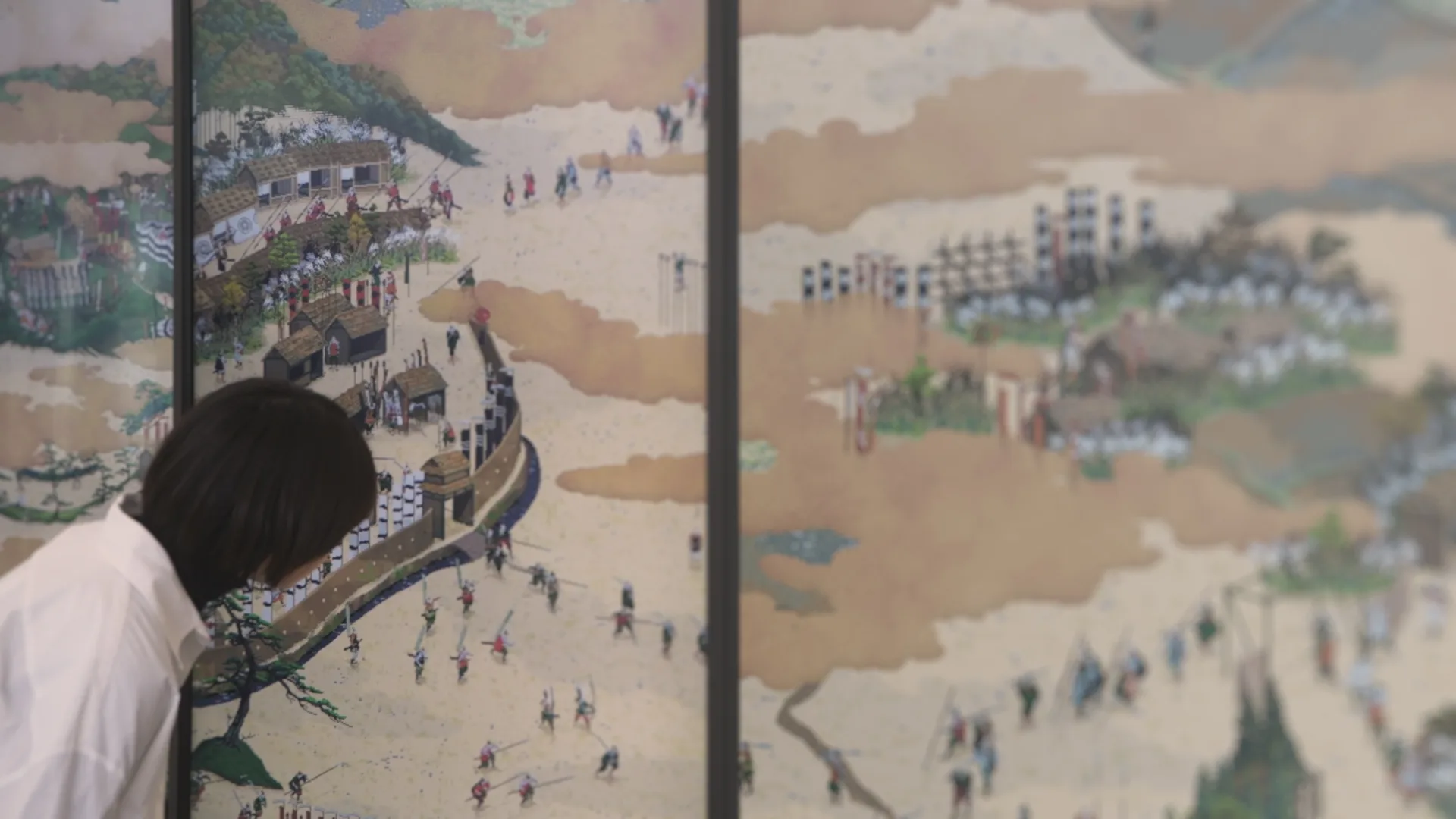
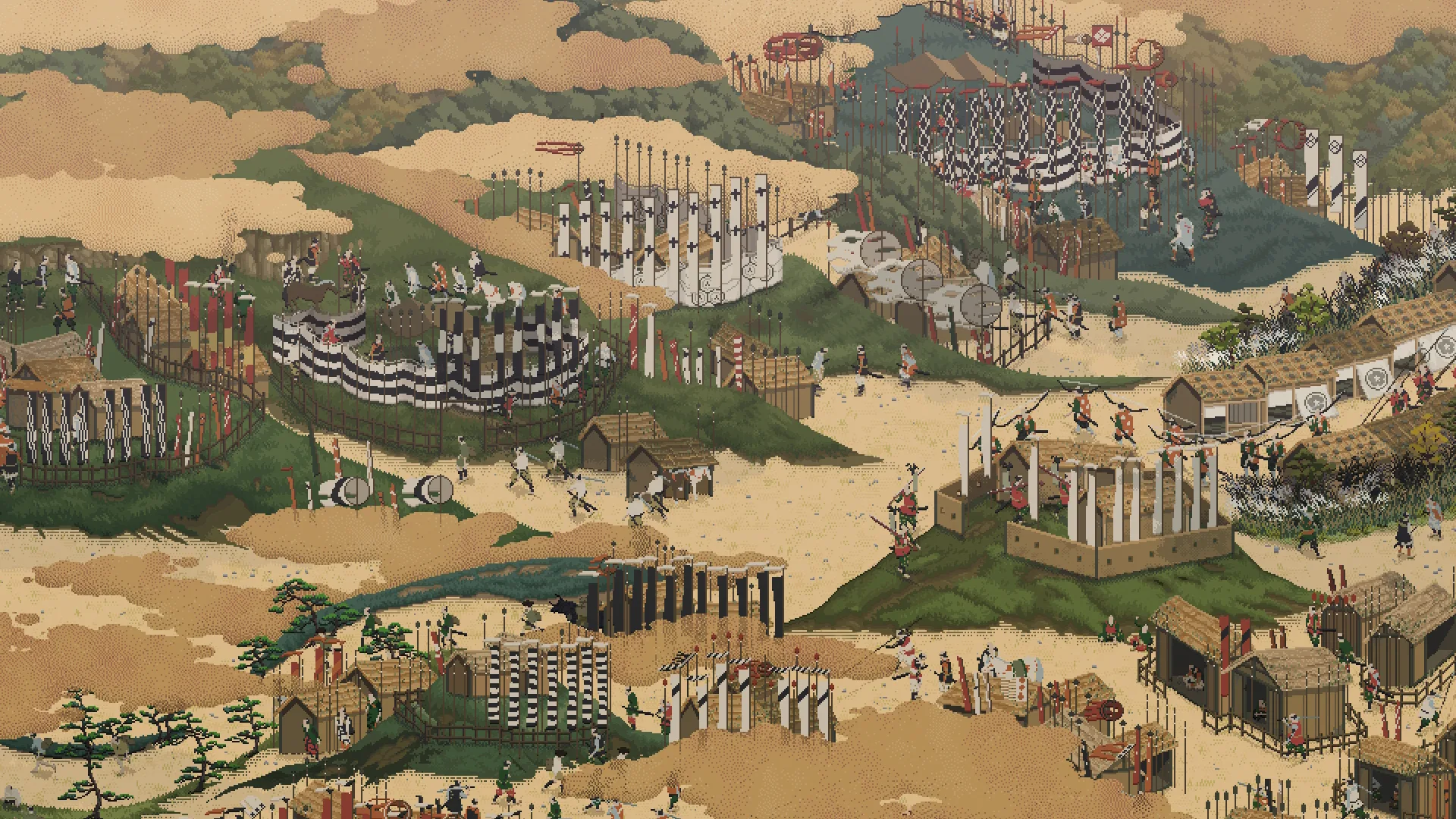
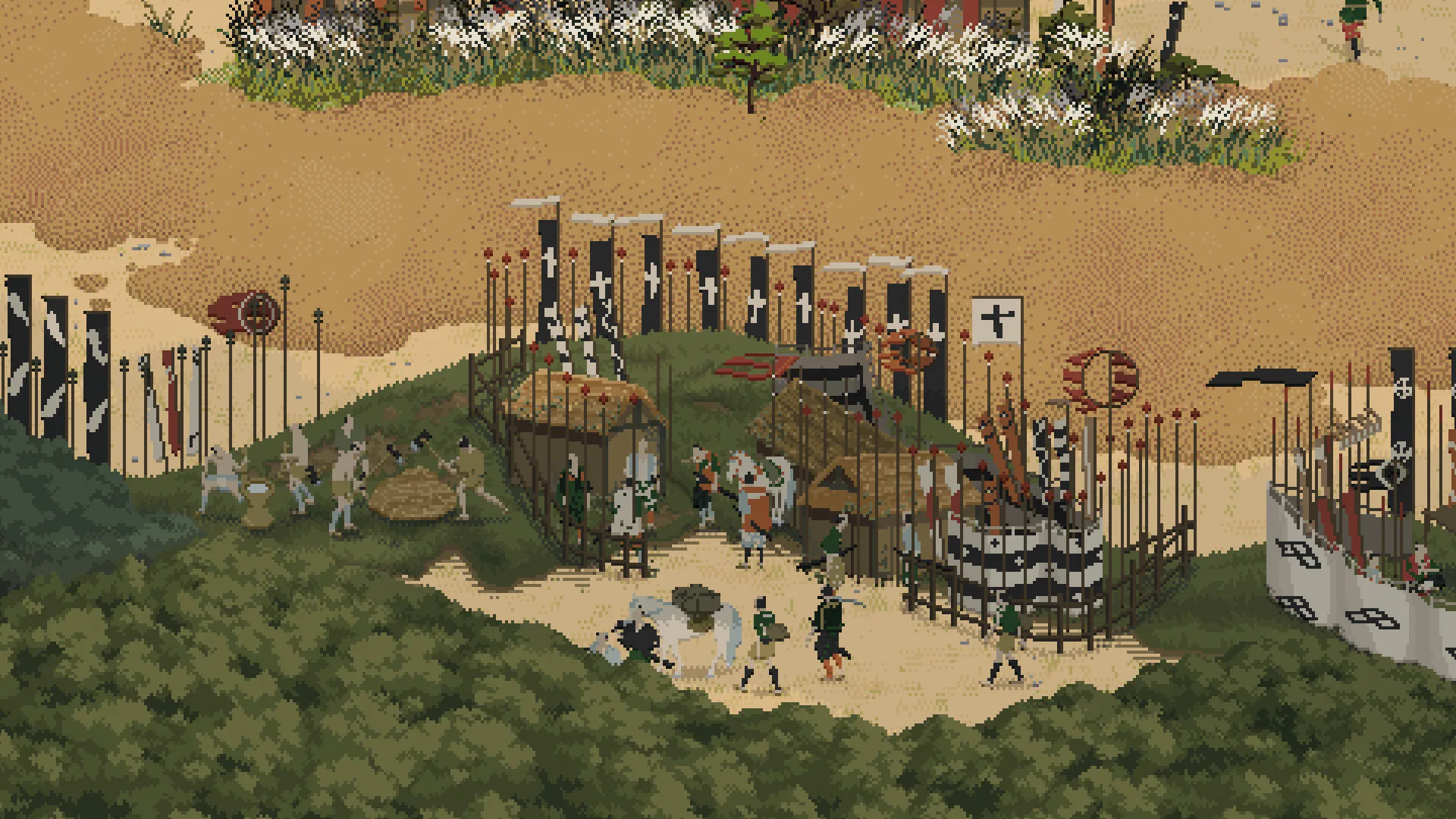
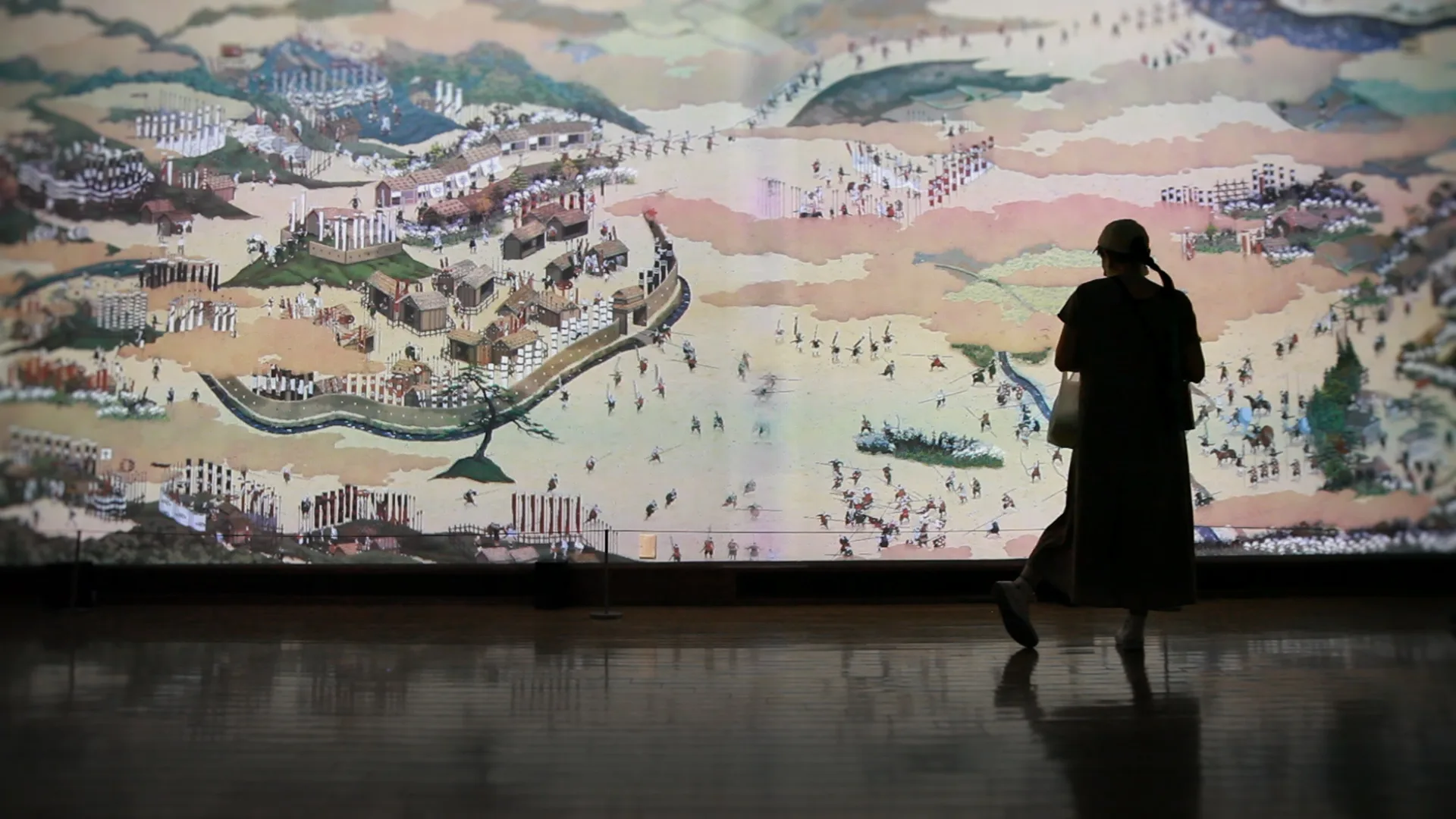
17世紀初期に描かれた重要文化財「関ヶ原合戦図屏風」(大阪歴史博物館所蔵)をモチーフに、当時の合戦の描写と、現在の古戦場跡に生い茂る黄金色のススキなど現代の自然風景を重ね合わせ、「動く山水画」として再構成しました。6台の大型モニターと指向性スピーカーを組み上げた映像装置は、かつて屏風が備えていた「絵画であり、空間を区切る立体装置でもある」という物質的・空間的な構造を現代に再解釈する試みでもあります。
中部国際空港(セントレア)での発表を経て、現在は岐阜関ケ原古戦場記念館にて後作《関ケ原群像図屏風》とともに常設展示され、1時間ごとに交互上映されています。
A digital folding-screen painting planned and created for exhibition at Chubu Centrair International Airport as part of "CULTURE GATE to JAPAN," a cultural initiative by the Agency for Cultural Affairs.
Inspired by the early 17th-century Important Cultural Property "Sekigahara Battle Screen" (held by the Osaka Museum of History), the work overlays depicted historical battle scenes with the natural elements that blanket the battlefield today, such as golden pampas grass, reconstituting the piece as a "moving landscape painting." Featuring a spatial installation constructed with six large monitors and directional speakers, the apparatus offers a contemporary reinterpretation of the folding screen's material and spatial structure—an object functioning simultaneously as a painting, a freestanding sculpture, and a spatial partition.
Following its initial presentation at Centrair, it is now permanently exhibited at the Gifu Sekigahara Battlefield Memorial Museum, screened alternately every hour alongside its sister work, "Sekigahara-Gunzo-zu-Byobu".
文化庁メディア芸術祭 第25回エンターテインメント部門 審査委員会推薦作品
25th Japan Media Arts Festival Entertainment Division Jury Selections
3DCGアニメーション:ひつじ、スコット・アレン
ピクセルデザイン:宮鳥オイル、田口李奈、西川琴音、武田芽依
サウンドデザイン:松井謙典
音楽:岡本憲昭
3DCG Animation: Hitsuji, Scott Allen
Pixel Design: miyatoriOIL, Rina Taguchi, Kotone Nishikawa, Mei Takeda
Sound Design: Kensuke Matsui
Music: Noriaki Okamoto